Grind size is the single most powerful variable you control after buying the beans. The right grind for your brew method determines whether you extract sweetness and clarity — or sourness, bitterness, and mud. This guide gives you the actual numbers: micron ranges for every method, starting settings for the most popular grinders, and a taste-based dial-in process for fixing a bad cup in two brews or fewer.
The Master Grind Size Chart
Coffee particle size is measured in microns (µm — thousandths of a millimeter). You don't need a laser particle analyzer to use this chart; the texture references map each range to something you can feel between your fingers.
| Brew Method | Grind Name | Approx. Range (µm) | Feels Like | Contact Time |
|---|
| Turkish / cezve | Extra fine | 40–220 | Flour / powdered sugar | 2–3 min |
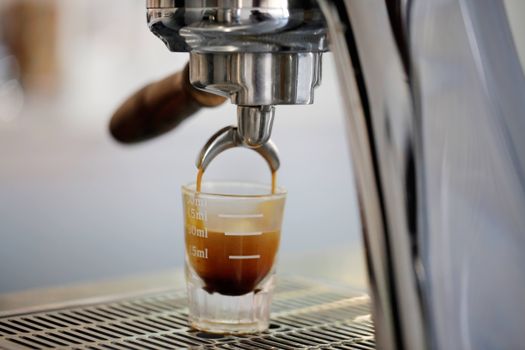
| Espresso | Fine | 170–300 | Table salt | 25–32 sec |
| Moka pot | Fine–medium | 360–660 | Slightly gritty sand | 3–4 min |
| AeroPress (short steep) | Medium-fine | 400–600 | Fine sand | 1–2 min |
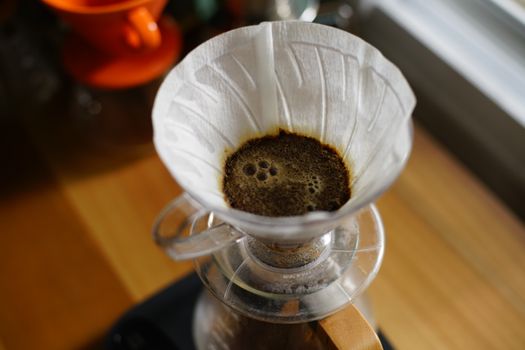
| Pour over (V60, Kalita) | Medium-fine to medium | 400–700 | Sand | 2.5–3.5 min |
| Flat-bottom drip machine | Medium | 600–900 | Coarse sand | 4–6 min |
| Chemex | Medium-coarse | 700–900 | Rough sand / fine gravel | 4–5 min |
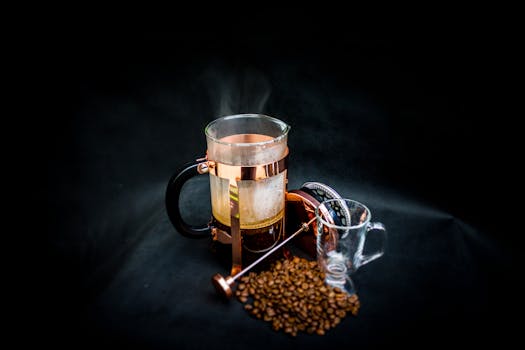
| French press | Coarse | 750–1,100 | Coarse sea salt | 4 min |
| Cold brew | Extra coarse | 800–1,400 | Peppercorns, cracked | 12–18 hrs |
The pattern behind the chart: the shorter the contact time, the finer the grind. Espresso has ~30 seconds to extract, so it needs enormous surface area. Cold brew steeps overnight, so coarse particles extract plenty — and fine particles would over-extract into bitterness.
Starting Settings for Popular Grinders
Grinder settings aren't standardized, and even two units of the same model can differ slightly after burr seasoning. Treat these as starting points, then dial in by taste using the process in the next section.
| Grinder | Pour Over | Drip | French Press | Espresso |
|---|
| Baratza Encore (1–40) | 12–18 | 15–20 | 28–32 | Not recommended |
| Baratza Encore ESP (1–40) | 20–26 | 24–30 | 34–38 | 4–10 |
| Fellow Ode Gen 2 (1–11) | 4–6 | 5–7 | 8–9 | Not capable |
| Comandante C40 (clicks from zero) | 18–25 | 22–28 | 30–35 | 8–13 |
| 1Zpresso JX-Pro (rotations) | 3.0–3.6 | 3.4–4.0 | 4.5–5.5 | 1.5–2.4 |
| Timemore C2 (clicks) | 15–18 | 18–21 | 24–28 | Not recommended |
*The standard Encore and Timemore C2 can technically grind fine enough for espresso, but their adjustment steps are too large to dial in a shot precisely — you'll jump from choking the machine to gushing with one click.
Two practical notes that most guides skip:
- Season new burrs. Fresh steel burrs cut differently for their first 1–2 lbs of coffee. If your brand-new grinder tastes off at the "correct" setting, run cheap beans through it before judging.
- Retention shifts your setting. If you change settings, the first few grams out still reflect the old setting. Purge 2–3 grams after any adjustment before brewing.
Water dissolves coffee's flavor compounds in a predictable order: first acids and fruit notes, then sugars and caramels, and finally the bitter, astringent compounds. Extraction speed is driven by surface area — halving particle size roughly doubles the surface exposed to water.
That gives you the two failure modes every bad cup falls into:
- Under-extraction (grind too coarse for the method): water leaves before reaching the sugars. The cup tastes sour, thin, salty, or like lemon water. It finishes fast and disappears from your palate quickly.
- Over-extraction (grind too fine): water blows past the sugars into the bitter compounds. The cup tastes harsh, hollow, and drying — that sandpaper feeling on your tongue is astringency, not "strength."
Strength (how much coffee is in the water) and extraction (which compounds got dissolved) are different axes. A cup can be strong and under-extracted. Fix extraction with grind size; fix strength with your coffee-to-water ratio.
The Two-Brew Dial-In Method
Change one variable at a time and let your tongue drive:
- Brew at the chart setting with a consistent ratio (1:16 for filter methods — 25g coffee to 400g water is a good default) and water just off the boil (200–205°F for light roasts, 195–200°F for dark).
- Taste for the dominant defect. Sour/thin/quick finish → under-extracted. Bitter/drying/harsh finish → over-extracted.
- Adjust grind only. Sour: go two steps finer (Encore) or 2–3 clicks finer (hand grinder). Bitter: go the same amount coarser.
- Re-brew. You should land inside the sweet zone within one or two adjustments. Fine-tune with single steps from there.
If the cup is simultaneously sour and bitter, the usual culprit is uneven grinding (see below) or channeling in pour over — pour more gently in slow spirals and level your bed before brewing.
Troubleshooting Matrix
| Symptom | Method | Likely Cause | Fix |
|---|
| V60 drains in under 2 min | Pour over | Too coarse | 2–3 clicks finer |
| V60 stalls past 4 min | Pour over | Too fine, or clogged fines | Coarser; consider a better grinder |
| Espresso shot runs 15 sec | Espresso | Too coarse | Noticeably finer, re-tamp evenly |
| Espresso drips, chokes at 45+ sec | Espresso | Too fine | Coarser in the smallest step available |
| French press is muddy/silty | Immersion | Too fine, or blade grinder | Coarser; pour gently, leave last ounce in the press |
| Cold brew tastes woody/flat | Immersion | Ground too far ahead, or too coarse | Grind just before steeping; 12–18 hr steep |
| Bitter drip from an auto machine | Drip | Too fine for basket flow | One notch coarser |
The Blade Grinder Problem
A blade grinder doesn't have a "grind size" — it has a chop time. The result is boulders and dust in the same batch: the dust over-extracts (bitter) while the boulders under-extract (sour), and no setting on the chart can fix a particle distribution that wide. If your coffee tastes both harsh and hollow no matter what you do, this is almost always why.
An entry burr grinder changes more about your coffee than any other sub-$100 purchase — more than better beans, a gooseneck kettle, or a scale. If budget forces a choice, buy the burr grinder first: a manual burr grinder like the Timemore C2 costs about the same as two bags of specialty beans.
Grind Freshness: The 15-Minute Window
Ground coffee loses aromatics fast — a meaningful share of its volatile compounds within 15–30 minutes of grinding, because grinding multiplies the surface exposed to oxygen by orders of magnitude. This is why pre-ground supermarket coffee tastes flat regardless of brew method, and why grinding right before brewing is the cheapest upgrade in this entire guide. The one exception: espresso benefits from grinding immediately, but a few minutes of "resting" the grounds can actually reduce clumping from static.
Frequently Asked Questions
What grind size should I use for a Hario V60?
Medium-fine, roughly 400–700 microns — about the texture of granulated sugar or beach sand. On a Baratza Encore start around 14; on a Comandante C40, around 20–22 clicks. Target a total brew time of 2.5–3.5 minutes for a 25g dose, and adjust finer if it drains faster and tastes sour.
Can one grinder handle both espresso and French press?
Only if it has small, precise adjustment steps at the fine end. Grinders like the Baratza Encore ESP, 1Zpresso JX-Pro, or Comandante C40 with a Red Clix upgrade can do both. Standard brew grinders (Encore, Fellow Ode, Timemore C2) cover everything from pour over to cold brew but can't adjust finely enough for consistent espresso.
Why does my French press coffee have sludge at the bottom?
The metal mesh filter lets fine particles through, and every grinder produces some fines. Reduce sludge by grinding coarser (750–1,100 µm), pouring gently without pressing the plunger to the bottom, and leaving the last half-inch of coffee in the press. A quality burr grinder with a tight particle distribution helps most.
Does grind size affect caffeine content?
Slightly. Finer grinds extract more of everything, including caffeine, given equal contact time. But the effect of grind is small compared to dose and ratio — if you want more caffeine, use more coffee rather than grinding finer, which will just make the cup bitter.
How do I convert settings between two different grinders?
You can't map settings directly — scales, burr geometry, and zero points all differ. Instead, match by texture and brew behavior: grind at your best-guess setting, compare the feel to the chart's texture references, brew, and time the drawdown. Two brews of taste-based adjustment gets you dialed on any new grinder.