Pour over is one of the simplest ways to make a clean, clear cup that shows what a coffee actually tastes like. It's also unforgiving of guesswork: a few grams or a few degrees change the result. This guide gives you one reliable recipe with real numbers, a pour schedule you can follow with a timer, and a troubleshooting table for when the cup isn't right.
The Recipe at a Glance
| For one large mug |
|---|
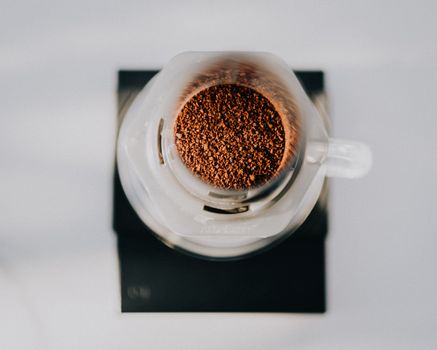
| Coffee | 20 g, ground medium-fine (like table salt to fine sand) |
| Water | 320 g (1:16 ratio), plus extra for rinsing the filter |
| Water temperature | 93–96°C (200–205°F) — just off the boil |
| Total brew time | About 2:45–3:30 |
| Makes | About 280 ml (9–10 fl oz) in the cup |
For a different amount, use our coffee ratio calculator — it works out coffee and water for any number of cups.
What Is Pour Over Coffee?
Pour over means pouring hot water by hand over ground coffee in a filter cone and letting it drip through. Because you control the pouring, you control how evenly the water moves through the coffee — and paper filters remove most oils and fine particles, which gives a clean, light-bodied cup that highlights acidity and aroma.
Essential Pour Over Equipment
- A dripper. The three most common styles are compared below.
- Filters made for that dripper.
- A burr grinder. Blade grinders produce a mix of dust and chunks that drains unevenly. If you don't have a grinder yet, see our beginner grinder guide.
- A scale that reads to 0.1 g, ideally with a built-in timer or a phone timer alongside it. Weighing both coffee and water is the single biggest consistency upgrade you can make.
- A kettle. A gooseneck kettle makes it much easier to pour slowly and precisely, but a regular kettle works if you pour carefully and slowly.
| Dripper | Shape | How it brews | Best for |
|---|
| Hario V60 | Cone, one large hole | Fast; flow depends heavily on your pouring and grind | People who want control and like bright, clear cups |
| Kalita Wave | Flat bottom, three small holes | Slower, more even; forgiving of pouring technique | Beginners and consistency |
| Chemex | Cone with thick filters | Slow; very clean, light body | Larger batches (2–4 cups); grind slightly coarser |
Step-by-Step Pour Over Coffee Method
- Heat the water to just off the boil — 93–96°C (200–205°F). Use the hotter end for light roasts and around 90–92°C for dark roasts.
- Rinse the filter. Place the filter in the dripper, set it on your mug or server, and pour hot water through it. This removes papery taste and preheats everything. Discard the rinse water.
- Add the coffee (20 g), shake the dripper gently to level the bed, and zero the scale.
- Bloom. Start the timer and pour about 50–60 g of water — enough to wet all the grounds. Gently swirl the dripper. Wait 30–45 seconds while the coffee releases carbon dioxide. Fresh coffee will bubble and rise; coffee that's past its peak may barely bloom at all, which is a sign it's stale.
- Main pours. Pour in slow spirals from the center outward, avoiding the paper edges:
| Time | Pour to (scale reading) |
|---|
| 0:00 | 50–60 g (bloom) |
| 0:45 | 200 g |
| 1:15 | 320 g |
- Settle the bed. Give the dripper one gentle swirl so the coffee bed ends up flat.
- Let it drain. The water should finish dripping through at around 2:45–3:30. A flat bed of grounds at the end is a sign of an even extraction.
Perfecting Your Pour Over Coffee Ratio
1:16 is a middle-of-the-road starting point, in line with the range the Specialty Coffee Association's brewing guidelines suggest for drip coffee. If the cup is well extracted (sweet, not sour or bitter) but too strong or too weak, change the ratio:
- Stronger: 1:15 (21 g coffee to 320 g water)
- Lighter: 1:17 (19 g coffee to 320 g water)
If the problem is taste — sour or bitter — change the grind instead. That's extraction, not strength.
Troubleshooting Your Pour Over
| Symptom | Likely cause | Fix |
|---|
| Sour, thin, finishes in under 2:30 | Grind too coarse — under-extracted | Grind finer |
| Bitter, dry, takes more than 4:00 | Grind too fine — over-extracted | Grind coarser |
| Drains fast at first, then stalls | Too many fines clogging the filter | Grind a little coarser; pour more gently; consider a better grinder |
| Sour and bitter | Uneven extraction (channeling) | Pour more gently in the center; swirl after the bloom and final pour |
| Flat, papery taste | Filter not rinsed, or stale coffee | Rinse the filter; use beans roasted within the last month |
| Tastes weak but not sour | Ratio too high | Use more coffee (1:15) |
For grind settings on popular grinders, see our grind size guide.
Common Pour Over Mistakes to Avoid
- Pouring onto the paper. Water that runs down the filter walls bypasses the coffee and dilutes the cup.
- Skipping the bloom. Trapped gas pushes water away from the grounds and causes uneven extraction.
- Using boiling water on dark roasts. Dark roasts extract more easily; water that's too hot pulls out extra bitterness.
- Measuring by scoop. A scoop of coffee can weigh anywhere from about 4 to 7 grams depending on grind and roast, so a scale is far more reliable.
- Ignoring water quality. Coffee is about 98% water, so its mineral content matters. Filtered tap water is usually best; distilled or very soft water tends to make flat, dull coffee because extraction depends on some mineral content.
Choosing the Right Coffee for Pour Over
Pour over rewards light and medium roasts, where fruit, florals, and acidity come through clearly — washed Ethiopian and Kenyan coffees are classic choices. Dark roasts work too, but the clean, light body of a paper-filtered cup can make them taste thin; a French press may suit them better. See our AeroPress vs French press guide for immersion options.
A Larger-Batch Variation
For two cups, scale up to 30 g of coffee and 500 g of water, using the same principles: bloom with about 60 g, then pour the remainder in one or two additions, and aim for the water to finish draining around 3:00–3:30. This follows a similar structure to pour over techniques popularized by coffee educator and author James Hoffmann, among others, though exact pour counts and timings vary between methods.
Maintenance and Care
Rinse the dripper after each use and wash it with warm soapy water every few days — coffee oils build up and turn rancid over time. Ceramic and glass drippers can usually go in the dishwasher; check the manufacturer's guidance for plastic and metal models. Store filters in a sealed bag or container so they don't absorb kitchen odors.
Frequently Asked Questions
What is the best ratio for pour over coffee?
1:16 is a good starting point — 20 g of coffee to 320 g of water. Use 1:15 for a stronger cup or 1:17 for a lighter one.
What grind size is best for pour over?
Medium-fine, roughly the texture of table salt to fine sand. If the brew finishes in under 2:30 and tastes sour, grind finer; if it takes over 4 minutes and tastes bitter, grind coarser.
What water temperature should I use for pour over?
93–96°C (200–205°F), just off the boil. Use the hotter end for light roasts and around 90–92°C for dark roasts.
Do I need a gooseneck kettle?
It helps you pour slowly and precisely, but it isn't essential. With a regular kettle, pour in small, careful amounts and avoid pouring onto the filter paper.