A burr grinder is the highest-impact coffee purchase under $200 — more than better beans, a gooseneck kettle, or any brewer. It's also a category full of spec-sheet noise designed to upsell you. This guide gives you the decision framework first: which specs actually change your cup, which are marketing, and what each price tier genuinely buys. Then specific picks, with honest reasons to not buy each one. Prices below are approximate and move around with sales and supply — treat them as ballpark, not quotes.
The Only Three Questions That Matter
1. What do you brew? French press, drip, and pour over need a "brew-range" grinder — widely available and affordable. Espresso needs fine, precise adjustment steps, which roughly doubles the price of entry. Buying a brew grinder and hoping it'll do espresso later is a common early mistake in home coffee; decide now.
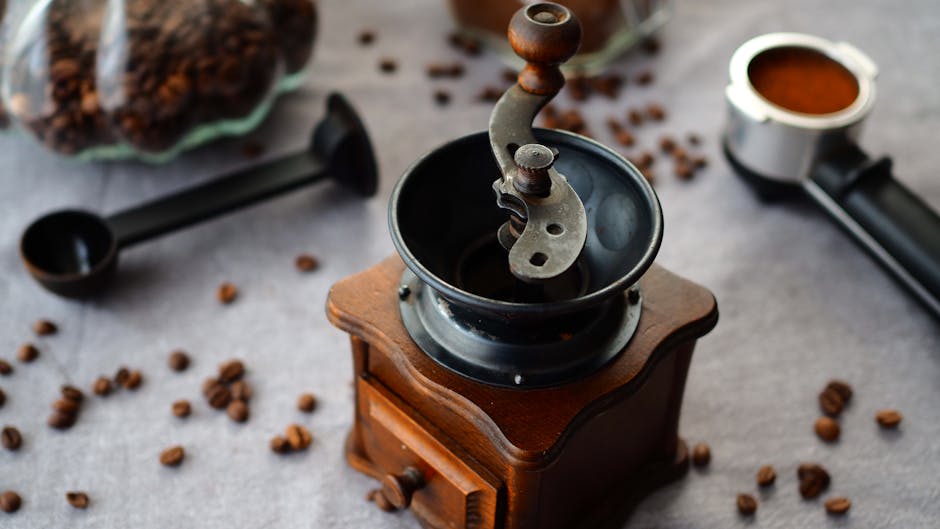
2. How many cups, how often? A hand grinder is 60–90 seconds of cranking per 15–20 g dose. Fine for one cup; genuinely tedious for a 4-cup morning batch. Electric earns its price through repetition, not quality — a $70–80 hand grinder often out-grinds a $100 electric.
3. Where will it live? Electric burr grinders are loud — commonly in the 70–85 dB range, roughly vacuum-cleaner volume — and claim permanent counter space. Hand grinders are quieter, drawer-sized, and travel well.
Burr vs. Blade: The Evidence, Briefly
A blade grinder chops randomly, producing dust and boulders in the same batch. The dust over-extracts (bitter), the boulders under-extract (sour), and the result is a cup that's harsh and hollow simultaneously — no setting or technique fixes it, because there is no setting. Burr grinders crush beans between two cutting surfaces at a set gap, producing a consistent particle size you can adjust.
This isn't audiophile hair-splitting; it's the difference between "grind size" existing as a controllable variable or not. If the budget is tight, put it toward a manual burr grinder rather than any electric blade model — the manual burr wins on the only metric that matters. (Full particle-size chart and per-method settings in our grind size guide.)
What Each Price Tier Actually Buys
| Tier | What Changes | Honest Examples (typical street price) |
|---|
| $35–50 manual | Entry steel conical burrs; real grind consistency for brew methods; plastic bodies, some wobble | Timemore C2 (~$40–50), Hario Skerton Pro (~$45–55) |
| $65–100 manual | Better burr alignment and bearings — noticeably tighter grind, smoother crank; espresso-capable at the top end | 1Zpresso Q Air (~$70–90), Kingrinder K4 (~$70–90) |
| $80–150 electric | Convenience: hopper, one-button, timer on some; grind quality roughly comparable to a $65–90 manual | OXO Brew Conical (~$100–120), Baratza Encore (~$150–170) |
| $150–250 electric | Espresso-precise steps (Encore ESP) or premium brew burrs and quiet motors (Fellow Opus) | Baratza Encore ESP (~$200–230), Fellow Opus (~$155–195) |
| $250+ | Diminishing returns for beginners — flat burrs, single-dosing, alignment tuning | Fellow Ode Gen 2, DF64 class |
The pattern worth internalizing: electric pricing buys convenience before it buys quality. A Kingrinder K4 grinds comparably to electrics costing substantially more; you're paying the electric premium to not crank a handle at 6 a.m. That's a legitimate thing to pay for — just know it's what you're paying for.
Specific Picks, With Reasons Not to Buy
Timemore C2 (~$40–50, manual) — a solid default first grinder. Consistent for French press through pour over, compact, well-built for the price. Don't buy if: you brew more than two cups at once (the small hopper and your forearm will both complain), or you ever want espresso — its steps are too coarse to dial in a shot.
Kingrinder K4 / 1Zpresso Q-class (~$70–90, manual) — the value sweet spot in home coffee grinding. Tighter particle distribution than the C2, and the K4's fine-end adjustment is genuinely espresso-capable for occasional use. Don't buy if: daily hand-cranking will quietly push you back to pre-ground — be honest about this.
Baratza Encore (~$150–170, electric) — the long-game pick: roughly 40 settings covering every brew method except espresso, widely available replacement parts, and an owner base that reports many years of reliable use. Don't buy if: espresso is anywhere in your plans (get the ESP version instead, whose redesigned fine range exists for exactly this) or your kitchen shares a wall with a sleeping partner — it's loud.
OXO Brew Conical (~$100–120, electric) — a reasonable budget-electric compromise: quieter than the Encore, built-in timer, respectable consistency. Don't buy if: you want the longest possible service life — parts support is thinner than Baratza's, and that difference is much of what the Encore's extra cost buys.
Fellow Opus (~$155–195, electric) — flat-style burrs, quiet operation, and espresso-capable settings on paper. Don't buy if: you're spec-shopping your first grinder — at beginner skill levels its cup-quality edge over the Encore is smaller than the price gap suggests.
Specs You Can Ignore
- "Number of grind settings" — 40 well-spaced settings beat "240 micro-steps" with overlapping output. Step size and consistency matter; the count is marketing.
- Stainless vs. ceramic burrs at entry level — both fine; alignment and burr geometry matter far more than the material.
- Wattage — tells you nothing about grind quality.
- "Espresso setting" on sub-$100 electrics — reaching a fine grind is not the same as adjusting precisely within the fine range. If the steps are big, you'll jump from choking the machine to gushing with one click.
The Habits That Make Any Grinder Better
Grind right before brewing — ground coffee loses aromatics within roughly 15–30 minutes, which is why fresh-ground cheap beans routinely beat week-old pre-ground expensive ones. Purge a few grams after changing settings (the first grams out reflect the old setting). Brush the burrs every few weeks; oily residue drifts your grind finer over time and stales the cup. And season new burrs with several ounces to a pound of cheap beans before judging your purchase — fresh steel cuts differently for its first batch.
Bottom Line
One cup at a time on a budget: Timemore C2. The best pure value in grinding: Kingrinder K4 or 1Zpresso Q Air. Multiple daily cups, want it effortless and backed by solid parts support: Baratza Encore — or Encore ESP if espresso is even a maybe. Skip every blade grinder at any price, and spend whatever's left of the budget on fresher beans, where it does more good than any spec upgrade.
Frequently Asked Questions
Is a burr grinder really worth it for a beginner?
Yes — it's the purchase that makes every other variable controllable. A blade grinder produces dust and boulders simultaneously, so your cup is bitter and sour at once regardless of technique. A manual burr grinder in the $40-50 range fixes this permanently, which is why it outranks better beans or brewers as the first upgrade.
Should I get a manual or electric grinder first?
Match it to your volume: one or two cups a day, manual — a $70-90 hand grinder out-grinds most $100-150 electrics on grind quality alone. Three or more cups, or multiple drinkers, electric — 90 seconds of cranking per dose compounds into a reason people quit. Quality-wise the tiers overlap heavily; you're mostly choosing convenience versus price.
Can a cheap grinder make espresso?
Reaching "fine" isn't the hurdle — adjusting precisely within fine is. Espresso needs small steps between settings, or one click jumps you from a choked shot to a gusher. Realistic entry points are grinders like the Kingrinder K4 (manual) or Baratza Encore ESP (electric), both built with espresso-range adjustment in mind. The standard Encore, Timemore C2, and most sub-$100 electrics can't dial in shots consistently despite what the box implies.
How much should a beginner spend on a coffee grinder?
Roughly $40-90 for manual covers every non-espresso method with genuinely good results. $100-170 buys electric convenience at similar grind quality. Past $200, beginners are often paying for refinements they can't yet taste — put the difference into fresher beans instead. Exact prices shift with sales, so treat these as rough bands rather than fixed numbers.
Why does my new burr grinder taste worse than expected?
Three usual causes: unseasoned burrs (run some cheap beans through first — fresh steel cuts differently at first), a factory-default setting that's wrong for your method (check a grind chart and adjust by taste), or stale pre-ground habits — a grinder only helps if you grind right before brewing.