# Pressure Profiling Espresso Machines: The Ultimate Guide to Perfect Extraction
Coffee brewing has evolved tremendously over the past decade, and one of the most exciting innovations to hit the espresso world is pressure profiling technology. If you've ever wondered why your shots taste different from day to day, or why some cafes seem to pull impossibly perfect espresso, pressure profiling might be the missing piece of the puzzle.
Pressure profiling espresso machines allow you to control and adjust the water pressure throughout the entire extraction process, rather than maintaining a constant 9 bars of pressure like traditional machines. This dynamic pressure control opens up a whole new world of flavor possibilities in your espresso shots.
Think of it like this: instead of playing a single note on a piano, you're now conducting an entire orchestra. The ability to ramp pressure up and down during extraction lets you highlight different flavor compounds in your coffee beans, creating more complex and nuanced shots.
Traditional espresso machines pump water through coffee grounds at approximately 9 bars of pressure for the entire 25-30 second extraction. While this works well and has produced countless delicious shots, it's essentially a one-size-fits-all approach that doesn't account for the unique characteristics of different coffee beans.
Pressure profiling works by manipulating extraction variables to optimize flavor development. Different compounds in coffee extract at different rates and pressures:
By controlling pressure throughout the shot, you can emphasize the flavors you want while minimizing unwanted characteristics.
Enhanced Flavor Control: Adjust pressure to bring out specific tasting notes in different coffee origins
Reduced Channeling: Lower initial pressure allows for more even wetting of the coffee bed
Extended Sweet Spot: Fine-tune extraction to hit that perfect balance point for any bean
Consistency: Compensate for variables like grind size and dose variations
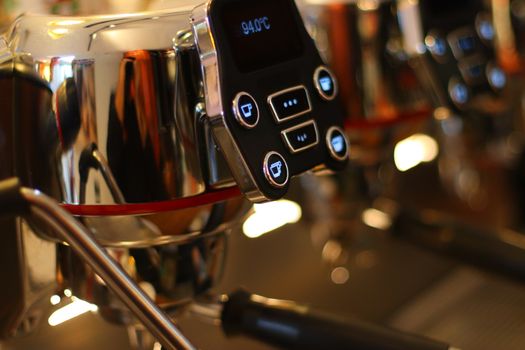
Machines like the La Marzocco GS3 MP feature manual paddle control, giving you complete real-time control over pressure. This hands-on approach is perfect for coffee enthusiasts who love experimenting and want maximum control over their brewing process.
Machines such as the Decent Espresso DE1+ offer programmable profiles that automatically adjust pressure according to pre-set curves. You can download profiles created by coffee experts or design your own custom extraction recipes.
Some newer machines combine both manual and automatic options, letting you choose between programmed profiles or manual control depending on your mood and the coffee you're brewing.
Start with very low pressure (1-2 bars) for the first 5-10 seconds to evenly wet the coffee bed, then gradually ramp up to full pressure. This technique reduces channeling and improves extraction uniformity.
Begin at full 9-bar pressure and gradually decrease throughout extraction. This method works particularly well with lighter roasted coffees, helping to extract delicate floral and fruity notes without over-extracting bitter compounds.
Slowly increase pressure from low to high throughout the shot. This technique is excellent for highlighting the complex flavor development in specialty coffee beans, allowing different compounds to extract at their optimal pressure points.
Maintain moderate pressure for most of the extraction with brief high-pressure pulses. This advanced technique can help break through compacted areas in the coffee bed while maintaining overall extraction balance.
La Marzocco GS3 MP: The gold standard for manual pressure profiling, offering precise paddle control and exceptional build quality.
Decent Espresso DE1+: Revolutionary machine with advanced profiling software and incredible customization options.
Slayer Single Group: Commercial-quality machine with intuitive pressure profiling controls.
Profitec Pro 800: Excellent entry point into pressure profiling with both manual and automatic modes.
ECM Synchronika with Flow Control: Traditional dual boiler with added flow control device for pressure manipulation.
To get the most from pressure profiling, you'll need quality supporting equipment. A precision grinder is crucial - consider options available through Fellow for consistent particle size distribution. Your tamping technique becomes even more critical with pressure profiling, so invest in a quality tamper from Amazon's extensive selection.
Pressure profiling works with any coffee, but you'll see the most dramatic improvements with:
- Single-origin beans with distinct flavor profiles
- Light to medium roasts
- Freshly roasted coffee (within 2-4 weeks)
Consider exploring different origins through a Trade Coffee subscription to experiment with various beans and discover which respond best to different pressure profiles.
Start with basic profiles and gradually experiment with more complex curves. Keep detailed notes about:
- Grind size adjustments
- Dose and yield ratios
- Pressure profile used
- Resulting flavor characteristics
New users often create overly complex pressure curves. Start simple with basic pre-infusion or gentle ramping profiles before attempting advanced techniques.
Pressure profiling isn't magic - you still need proper grind size, dose, and distribution. Don't use pressure profiling as a band-aid for poor fundamental technique.
Without careful tasting and note-taking, it's impossible to understand how different profiles affect flavor. Cup each shot thoughtfully and record your observations.
Pressure profiling technology continues advancing rapidly. We're seeing integration with smartphone apps, AI-assisted profile recommendations, and even more precise control systems. The technology that was once limited to world barista champions is becoming increasingly accessible to home enthusiasts.
Pressure profiling espresso machines represent a significant investment, typically ranging from $3,000 to $10,000+. Consider your current skill level, how often you make espresso, and whether you enjoy experimenting with brewing variables.
If you're already comfortable with espresso fundamentals and find yourself wanting more control over your shots, pressure profiling could be the perfect next step in your coffee journey.
Pressure profiling espresso machines open up incredible possibilities for coffee enthusiasts who want to push the boundaries of what's possible in espresso extraction. While they require a higher level of engagement and experimentation, the reward is unprecedented control over your coffee's flavor profile.
Whether you choose a manual paddle system for hands-on control or an automated machine with programmable profiles, pressure profiling technology lets you become a true artist in espresso preparation. The learning curve may be steep, but the journey of discovering new flavor territories in your favorite coffees makes every shot an exciting experiment.
Remember, the best pressure profiling machine is the one that matches your brewing style, technical comfort level, and budget. Take time to research thoroughly, and don't hesitate to visit specialty coffee shops that use these machines to experience pressure-profiled espresso firsthand.