First, an honest note: true espresso is brewed by forcing water through finely ground coffee at about 9 bars of pressure. No kitchen method without a pump or lever reaches that, so nothing below makes exactly espresso. What these methods do make is strong, concentrated coffee that works well on its own and very well in lattes, cappuccinos, and iced drinks — and one option (a manual espresso maker) does make real espresso, by hand.
The Methods Compared
| Method | Pressure | Result | Crema | Cost to start | Best for |
|---|
| Moka pot | About 1–1.5 bar | Very strong, bold, slightly bitter | Little to none | Low | Milk drinks, the closest everyday substitute |
| AeroPress | Under 1 bar, by hand | Concentrated, smooth, clean | Light | Low to moderate | A quick, forgiving "espresso-style" shot |
| Manual espresso maker (Flair, Wacaco and similar) | Up to ~9 bar, by hand | Real espresso | Yes | Moderate to high | People who want actual espresso without an electric machine |
| Strong French press | None | Strong, full-bodied coffee | None | Low | Using what you already own |
Method 1: The Moka Pot (Stovetop Espresso)
The moka pot uses steam pressure in its bottom chamber to push hot water up through the coffee. It's the closest thing to espresso most households have, and it's what many people in Italy drink at home.
You'll need: a moka pot and coffee ground fine-medium — finer than drip, noticeably coarser than espresso.
- Fill the bottom chamber with hot water up to just below the safety valve. Starting with hot water shortens the time the pot sits on the heat, which reduces bitterness.
- Fill the basket with coffee until level. Don't tamp it — pressing it down can block flow.
- Screw the pot together with a towel (the base is hot) and set it on medium-low heat with the lid open.
- Watch the flow. Coffee should rise in a steady, honey-colored stream. When it turns pale and starts to sputter or gurgle, take it off the heat.
- Stop the brewing by running the base under cold water or setting it on a cold, damp towel. This prevents the last, bitter part of the brew.
The basket size sets the dose — a 3-cup moka pot typically holds 15–17 g of coffee. Our coffee ratio calculator includes a moka pot setting.
Method 2: AeroPress "Espresso-Style"
The AeroPress uses a plunger to push coffee through a paper filter. You can't generate espresso pressure by hand, but a short, concentrated recipe gives a smooth, strong shot that works well in milk.
- Use 18 g of coffee ground fine (between espresso and pour over).
- Put the AeroPress on a sturdy mug with a rinsed filter in place.
- Add 60–70 g of water at about 90–95°C (195–205°F) and stir for 10 seconds.
- After about 30 seconds, insert the plunger and press slowly and steadily for 20–30 seconds, stopping when you hear a hiss.
For more on the AeroPress, see our AeroPress vs French press comparison.
Method 3: A Manual Espresso Maker (Real Espresso, No Electricity)
Lever and hand-pump espresso makers — the Flair range, the Cafelat Robot, and portable pump devices like those from Wacaco — let you generate espresso pressure yourself. You heat water in a kettle, load a portafilter as you would on a machine, and press. Many models include a pressure gauge.
This is the only method here that makes real espresso with crema. It takes practice and needs a grinder that can grind fine enough for espresso. The Flair 58 Plus 2, for example, costs $699 and uses a standard 58mm portafilter; smaller and portable models cost considerably less. If you enjoy the process, it's a great alternative to a machine — see our beginner espresso machine guide to compare with electric options.
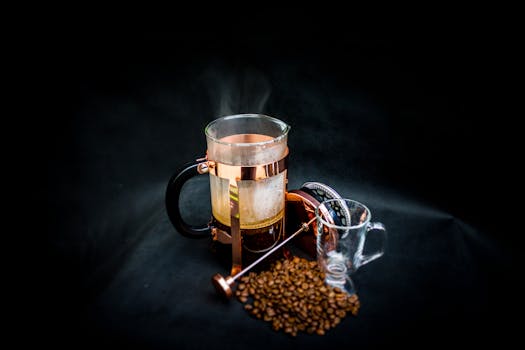
Method 4: A Strong French Press
The simplest option uses what's already in most kitchens. It won't taste like espresso, but it makes a strong base for milk drinks.
- Use twice your usual coffee: about 30 g of coarse-medium ground coffee to 250 g of water (about 1:8).
- Steep for 4 minutes, stir, skim the foam, and press gently.
- Pour carefully to leave the silt behind.
Essential Tips for Success
- Fresh coffee matters more with concentrated brews. Stale coffee tastes flat and bitter at high strength.
- Grind for the method. Too fine in a moka pot or French press gives bitter, muddy coffee; too coarse in an AeroPress gives weak, sour coffee.
- Weigh your coffee. It's the easiest way to repeat a good result.
- Use dark or medium roasts for moka pot and French press methods — light roasts can taste sour when brewed this way.
Serving: Turning It Into a Latte
For a latte, use about 60 ml of your concentrated coffee and 180–240 ml of steamed or frothed milk. No steam wand? Our guide to frothing milk without a machine covers the French press and jar methods.
Troubleshooting Common Issues
| Problem | Method | Fix |
|---|
| Bitter, burnt taste | Moka pot | Lower the heat, start with hot water, stop at the first sputter, cool the base |
| Coffee won't come up | Moka pot | Grind is too fine or coffee was tamped — use coarser grind, fill loosely |
| Weak and sour | AeroPress | Grind finer or use less water |
| Very hard to press | AeroPress | Grind is too fine — go slightly coarser |
| Gritty, muddy cup | French press | Grind coarser; pour slowly and leave the last bit behind |
Frequently Asked Questions
Can you make real espresso without a machine?
Only with a manual espresso maker such as a Flair or Cafelat Robot, which lets you generate about 9 bars of pressure by hand. Moka pots, AeroPress and French press make strong, concentrated coffee, but not true espresso.
Is moka pot coffee the same as espresso?
No. A moka pot brews at roughly 1–1.5 bars rather than about 9, so it produces strong, bold coffee with little crema. It's the closest everyday substitute and works very well in milk drinks.
What grind should I use for a moka pot?
Fine-medium — finer than drip coffee but noticeably coarser than espresso. Don't tamp it; fill the basket level and loose.
How do I make a latte without an espresso machine?
Brew about 60 ml of concentrated coffee with a moka pot or AeroPress, then add 180–240 ml of milk frothed in a French press or with a handheld frother.