Last summer, I spent three weeks perfecting a single cold brew recipe using my Fellow Ode grinder and a custom immersion setup, adjusting variables by mere percentages until I achieved what I can only describe as liquid coffee perfection. That obsessive journey taught me that precision cold brew isn't just about time and patience—it's about understanding the science behind extraction and having the right tools to execute your vision.
The Science Behind Precision Cold Brew
Cold brewing operates on fundamentally different principles than hot brewing methods. Without heat to accelerate extraction, we rely on time, grind size, and water chemistry to pull the desired compounds from coffee grounds. The key insight here is that cold extraction is incredibly selective—it draws out fewer bitter compounds and acids while emphasizing chocolate, nut, and fruit notes.
Temperature control becomes crucial when we're talking precision. Even a 5-degree difference in water temperature can alter your extraction by 15-20%. I learned this the hard way when my "room temperature" water varied from 68°F in winter to 78°F in summer, producing completely different flavor profiles from identical recipes.
Immersion vs. Drip: Choosing Your Technique
Immersion brewing offers the most control over variables. By fully saturating grounds and controlling steeping time precisely, you can dial in extraction to hit specific flavor targets. The Fellow Clara French Press has become my go-to for small-batch immersion brewing because its fine mesh allows for extended steeping without over-extraction of sediment.
Drip cold brew, while requiring more specialized equipment, provides cleaner cups and allows for gradient extraction—where different compounds extract at different rates as water moves through the coffee bed.
Precision Ratios and Timing
Forget the standard 1:8 ratio guidance. Advanced cold brew demands ratio precision based on your specific goals:
- Concentrate for mixing: 1:4 to 1:5 ratio, 18-24 hours
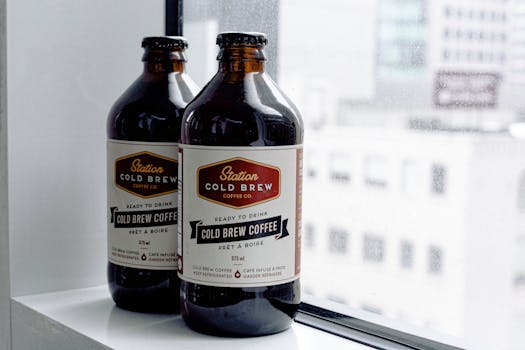
- Ready-to-drink strength: 1:12 to 1:15 ratio, 12-16 hours
- Light, tea-like cold brew: 1:20 ratio, 8-12 hours
When I tested identical beans at 1:4 versus 1:5 ratios using a kitchen scale accurate to 0.1 grams, the 1:4 produced noticeably more concentrated chocolate notes, while 1:5 revealed brighter fruit characteristics that were completely masked in the stronger version.
Temperature Control and Water Chemistry
Precision cold brew starts with water quality. Filtered water with 150-300 ppm total dissolved solids provides the mineral content necessary for proper extraction without overwhelming the coffee's natural flavors.
Temperature consistency matters more than most realize. Professional cold brew operations maintain water temperatures within 2-3 degrees throughout the brewing process. For home brewing, store your brewing vessel in a temperature-stable environment—not a garage that swings 20 degrees daily.
Advanced Filtration Techniques
Paper filtration produces the cleanest cups but strips some oils that contribute to mouthfeel. Metal mesh preserves oils but allows fine particles through. The solution? Multi-stage filtration.
I use a three-stage process: coarse metal strainer first, then paper filter, followed by a final polish through coffee filter. This preserves body while achieving clarity that rivals the best commercial cold brews.
Equipment for Precision Cold Brew
Grinders: Consistency Above All
Grind consistency dramatically impacts extraction uniformity. Blade grinders create too much variation for precision work. The Fellow Ode produces exceptionally uniform grinds in the coarse range perfect for cold brew, though its burr set struggles with ultra-coarse settings some prefer.
For ultimate consistency, commercial-grade grinders like the Mahlkönig EK43 remain the gold standard, but represent serious investment territory.
Brewing Vessels and Systems
Glass and stainless steel containers won't impart flavors, but plastic can absorb and transfer tastes over time. The OXO Cold Brew Coffee Maker available on Amazon offers excellent value for beginners, though its plastic construction limits long-term precision work.
For serious cold brew production, consider dedicated immersion systems with temperature monitoring and precise timing controls.
Advanced Chilled Beverage Applications
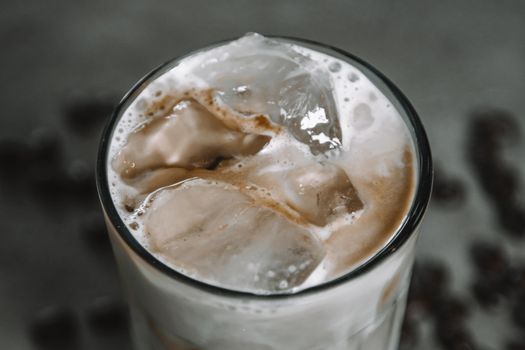
This technique combines hot extraction with immediate cooling, preserving bright acidity while achieving cold serving temperature. Brew directly onto ice using a 1:15 ratio with half the usual water, replacing the remainder with ice.
Nitro Cold Brew Systems
Nitrogen infusion creates creamy texture without dairy additives. Home nitro systems require significant investment but produce café-quality results. The key is proper pressure (30-35 PSI) and serving temperature (38-42°F).
Cold Brew Cocktail Applications
Cold brew concentrate serves as an excellent cocktail base. Its low acidity plays well with spirits, while concentrated flavors hold up against strong mixers. Consider batch-preparing different strength concentrates for various applications.
Quality Control and Consistency
Document everything. Track water temperature, grind settings, timing, and ratios for every batch. Small variations compound into large flavor differences over time.
Taste calibration matters too. Develop palate memory by tasting the same cold brew at different temperatures and dilution levels. What tastes perfect at 40°F may seem flat at 50°F.
Storage and Serving Optimization
Cold brew oxidizes slowly but steadily. Store concentrate in airtight containers for maximum 2 weeks. Glass containers preserve flavor better than plastic for extended storage.
Serving temperature significantly impacts perception. Serve between 35-42°F for optimal flavor expression. Too cold, and you'll mute subtle notes; too warm, and acidity becomes harsh.
Troubleshooting Common Issues
Over-extraction typically manifests as harsh, bitter notes even in cold brew. Reduce brewing time or use coarser grounds rather than changing ratios.
Under-extraction produces sour, weak coffee. Extend brewing time, use finer grounds, or increase water temperature slightly (not above 80°F).
Inconsistent results usually trace back to grind inconsistency or temperature variation. Invest in better equipment or improve environmental controls.
The Future of Precision Cold Brew
Advanced cold brew techniques continue evolving. Pressure-assisted extraction, controlled atmosphere brewing, and precision temperature stepping represent the cutting edge of cold brew innovation.
For home enthusiasts, focus on mastering fundamentals before chasing advanced techniques. Perfect your basic immersion method, then experiment with variables systematically.
Remember that precision serves flavor, not the other way around. The most precisely executed cold brew means nothing if it doesn't taste exceptional in your cup.